
Prompt: Why journal?
“Putting what is in your head on the page automatically gives you perspective. It automatically gives your clarity. It separate you from your thoughts, and once you have any amount of distance, you can make different choices. You can see your life as something bigger …” -Tara Schuster
Today is Day 7 within the tradition of Twelve Days of Christmas, and I offer you the oracle of [let your heart be your 🧭 compass] along with some free resources to explore [why] journaling is an absolutely essential practice + [how] to foster your practice.
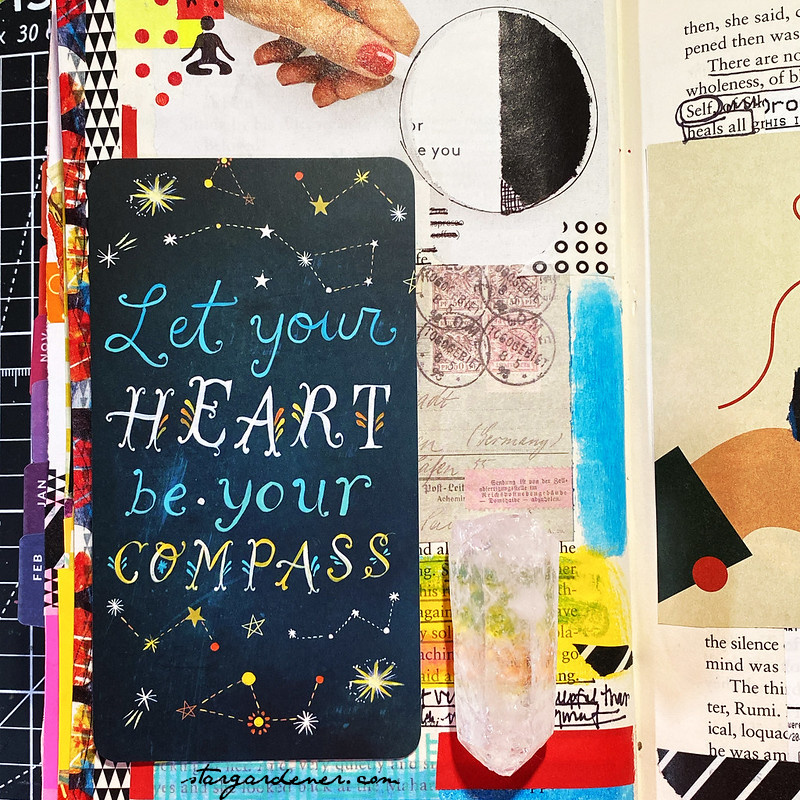
“My body is a compass—and it does not lie.” -Terry Tempest Williams
Braveheart, full disclosure, as a starting point I compiled a list of twelve prompts for this twelve day series. So-o, what you are reading are my first-draft responses; me “listening,” and allowing my heart to guide my writing. 🧭
And I am enjoying this daily practice so-o much! 💓 Also—I am so-o very grateful for your kind words and encouragement for this series of posts!
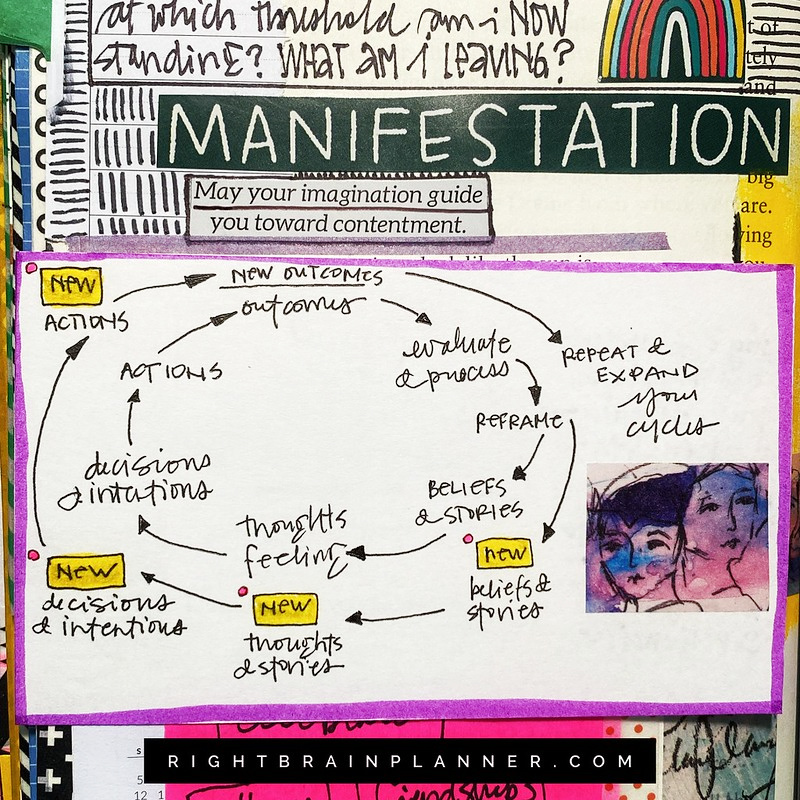
Compiling a journal—in whatever format is doable for you—is the path to new outcomes.
Braveheart, a journal practice (jots on a calendar, collage, hand-written entries, mark-making, doodles, etc.) helps us to hold space + know ourselves, and to heal and expand.
What we chronicle (and mentally process) provides us with snapshots of our needs, desires, worth and progress.
Pen-to-paper dated entries (in whatever form is doable) help us to identify specific patterns, thoughts and habits within our phases of living.
- There are numerous ways to approach journaling; my own journals started as random collages and handwritten entries on the lined pages of spiral notebooks throughout my teen years.
- My journal entries moved into whatever planner I was using during my college and career days of my 20’s. (Sort of the origin story of my right brain planning …)
- When I became a mom at 30, my “planner” morphed into journals and dated wall calendars (along with various color-coded Post-it Notes and collected pages in zip-lock bags).
- It was my diagnosis of ovarian cancer (at age 41) and becoming involved in art therapy groups, that ensured I would forever be a devoted journal-keeper/right brain planner.
🎨 My art therapist introduced me to a variety of therapeutic art and writing practices, including Expressive Journaling, a practice researched by James Pennebaker, PhD.
- Expressive writing can help your mental health, with James Pennebaker, PhD (podcast and transcript)
- Expressive Writing: Tip-sheet and Resources
- James Pennebaker on therapeutic journaling (Austin Kleon’s notes)
- An example of an expressive writing practice
Before I began art 🎨 therapy, I had no idea that my way of keeping a journal-planner had a name: visual journaling. I had no idea why it was such an essential (calming and clarifying) practice for me to spend time on-the-page (writing, collaging, doodling, etc.).
“Colors and shapes make a more definite statement than words.” -Georgia O’Keeffe
“I don’t know what I think until I write it down.” -Joan Didion
⏲️ The first step of a creative habit: it needs to feel doable + beneficial [for you] within two-minutes. “You have to standardize before you can optimize” (James Clear). This minimal threshold of time and energy ensures you will continue—and fosters flow and momentum.
journaling resources:
line-journals (daily-ish processing) tips + free download 📂
- The Ultimate Guide to Journaling by Anna Borges, WonderMind.com (marvelous overview of different kinds of journaling)
- A Beginner’s Guide to Journaling (That Actually Sticks!) by Jen Hatmaker (a quick read)
- “Journaling is the practice of recording your thoughts, feelings, and experiences regularly. The core idea is to express yourself on paper without judgment, offering a safe space to explore your inner world and make sense of your daily life. You can jot down a few lines each day or delve into long, reflective entries–whatever your preference, journaling is a versatile tool for self-discovery.” –Paula Palomar, PassionPlanner.com (quick overview + resources)
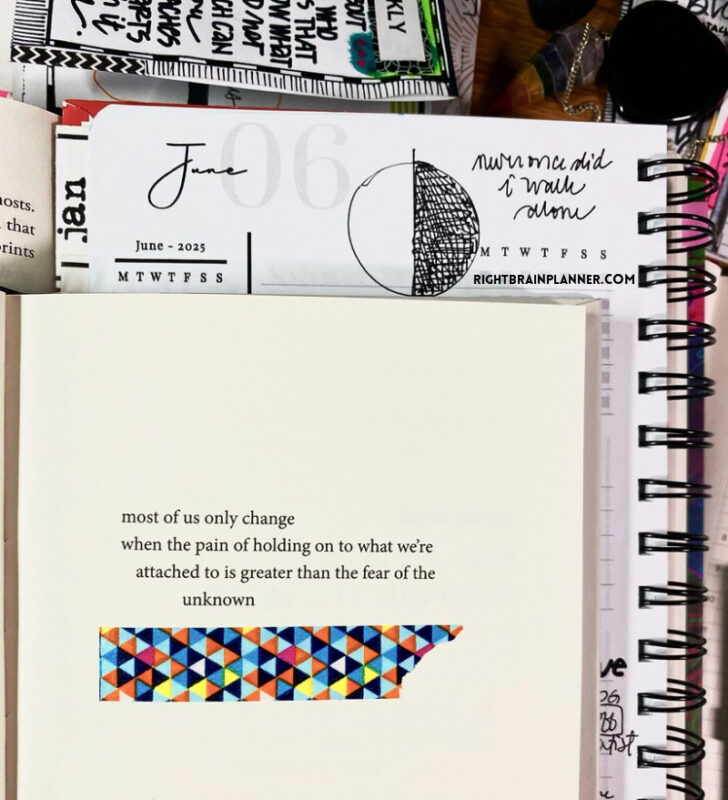
“[You can] compare thinking to quicksand. The more that we fight our thinking, the more it amplifies the negative emotions and the worse it gets.” -Joseph Nguyen
Aside from being a useful way to begin each day, journaling is also a way to switch tracks and redirect our energies when our thoughts lead to distraction and anxiety. 🛑
☑️ The tactile nature of pen-to-paper is a reset. 😊 (Also, I highly recommend Joseph Nguyen’s book, Don’t Believe Everything You Think. Listening to the audible book as you put pen-to-paper is an excellent starting point!) 🎬🎬🎬
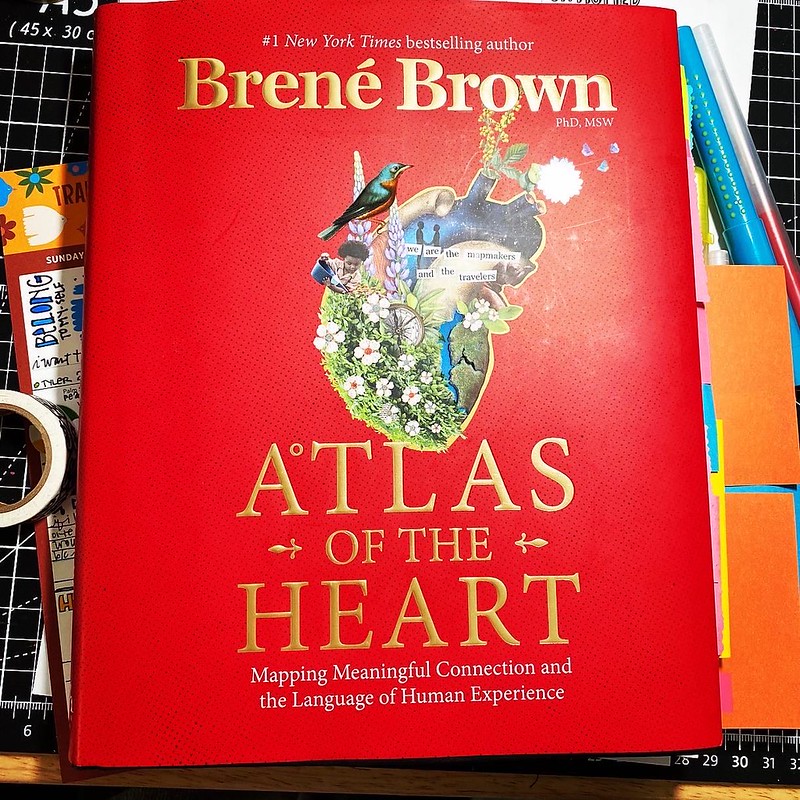
Reading, journaling and discussing Atlas of the Heart by Brené Brown proved to be essential for identifying the backstories of certain recurring emotions that typically led to thought loops and anxiety.
📕Atlas of the Heart | List of Emotions
“We cannot change what we are not aware of, and once we are aware, we cannot help but change.” -Sheryl Sandberg
A journal practice is a means of processing the details of our living, of identifying + naming what we are feeling (starting point) + what we desire (envisioning) as a means of mapping our way onward.
Slow-reading is an essential part of my right brain planning practice (journaling + redirecting my thoughts + envisioning). I listen and/or read pages from my “currently reading” book stacks on a daily basis, as well as hosting and participating in monthly book discussions.
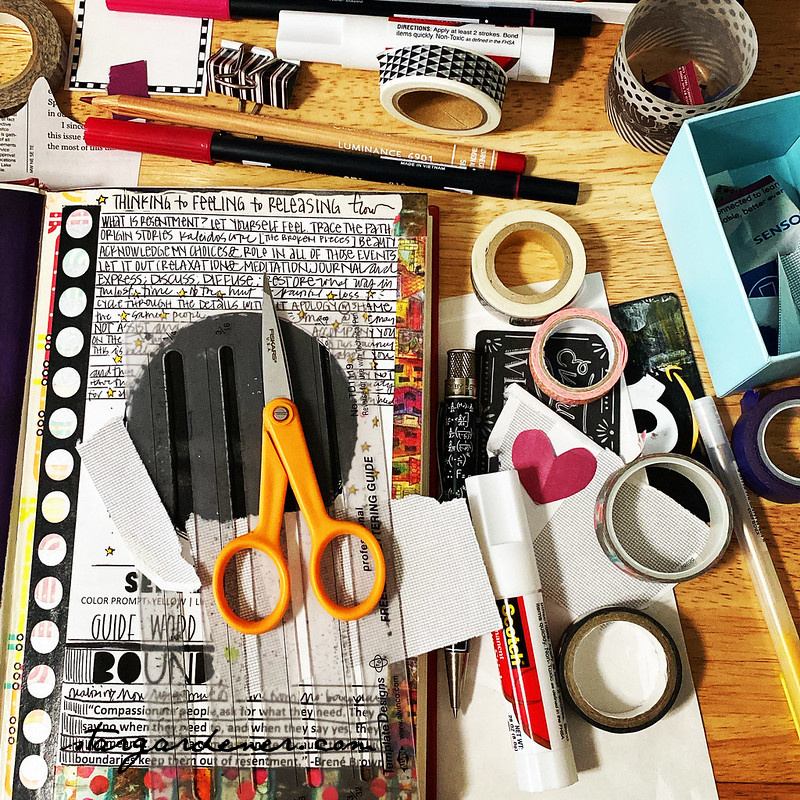
Braveheart, we learn by doing: we discover details about ourselves through chronicled observation 👀✍️📔 because everything we experience is data. 📊
Data is value-neutral; it is neither “good’ or “bad”—it is merely information to use for our choices, intentions and conclusions. Remembering this helps us to live free from judgment and shoulds.
➡️➡️➡️ As a daily prompt I have been posting oracle cards, content + free downloads here to offer ideas and resources for self-compassion + expression + attention + reflection.